

Public Lecture #1
“The Next Frontier in Edge AI: Holistic Hardware-Software Co-Design and Mixed-Signal Innovations”
Prof. Massoud PEDRAM (USC Viterbi School of Engineering)
Abstract
The rapid surge in deep neural network (DNN) complexity places immense computational pressure on resource-constrained edge devices. Historically, DNN optimization relied on isolated, hand-tuned software kernels that struggle to adapt to modern architectural demands. This keynote argues that the next leap in Edge AI efficiency requires transitioning to dynamic hardware-software co-design and embracing novel mixed-signal substrates. First, we introduce advanced Multi-Agent Reinforcement Learning (MARL) frameworks—such as MARCO—which navigate the massive combinatorial design space of hardware and software co-optimization. Employing a centralized-critic, decentralized-execution (CTDE) paradigm, specialized agents simultaneously optimize macro-level hardware configurations and software scheduling. To scale this search, we integrate Conformal Prediction (CP) to rigorously filter out suboptimal architectures early, safely slashing search times by three to four times. Second, we delve into physical computation substrates. We explore low-precision mixed-computation models that strategically combine 4-bit Posit (Posit4) formats with 4-bit fixed-point (FixP4) to maximize memory and energy efficiency. Transitioning to analog computing, we present MENAGE, a mixed-signal neuromorphic accelerator utilizing "virtual neurons" to enhance hardware utilization. Finally, we address analog reliability using lightweight, probabilistic denoising blocks to mitigate manufacturing and temporal variations. Ultimately, this holistic approach paves the way for robust, ultra-efficient Edge AI.
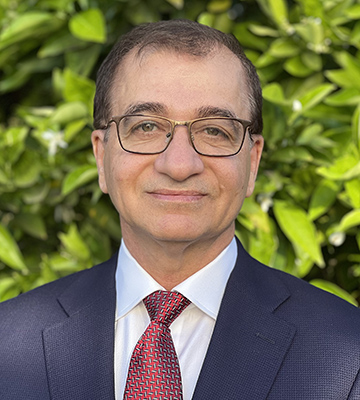
Prof. Massoud PEDRAM (USC Viterbi School of Engineering)