

Entrepreneurship Workshop
The AI Accelerator Ecosystem: Founders, Funders, and Future Trends
"The Evolution from Digital Implementation EDA to ADA"
Mr. Weibin DING (X-Times Design Automation Co., Ltd)
Abstract
With the rapid advancement of semiconductor technology and the increasing complexity of integrated circuit (IC) designs, traditional Electronic Design Automation (EDA) tools are facing unprecedented challenges in terms of efficiency, accuracy, and scalability. XDA company explores the evolutionary trajectory from conventional digital implementation EDA to Al-Driven Automation (ADA), a paradigm shift driven by the integration of artificial intelligence and advanced computational algorithms. The work highlights key innovations in algorithmic optimization, predictive modeling, and data-centric design automation that define the ADA framework. Furthermore, we present customer results demonstrating improved design convergence and optimization efficiency through ADA-enabled methodologies.
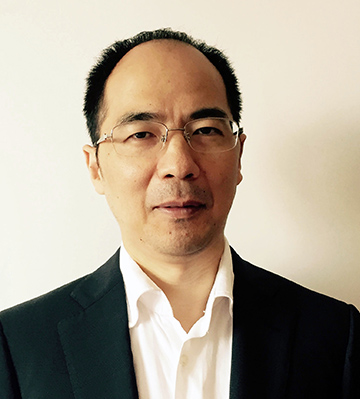
Mr. Weibin DING (X-Times Design Automation Co., Ltd)
" The Development of Machine Vision in the Era of Physical AI"
Mr. Michael MO (Shenzhen Fortsense Co., Ltd)
Abstract
With the rapid rise of Physical AI, artificial intelligence is no longer limited to virtual computing and has begun to deeply integrate into the real physical world. As the core perception carrier of Physical AI, machine vision is embracing a pivotal transformation. Going beyond the limitations of traditional image recognition, it integrates 3D perception, physical rule reasoning and real-time environmental understanding, providing underlying visual support for scenarios such as robotics, autonomous driving and intelligent industrial manufacturing. This speech focuses on the wave of Physical AI and analyzes the technological evolution, application value and future development directions of machine vision.

Mr. Michael MO (Shenzhen Fortsense Co., Ltd)
"Investment for AI Accelerator"
Mr. Guoqing HE (HEJUN Tech Capital)
Abstract
In the current technology cycle driven by generative AI, value is no longer concentrated solely in the models themselves. It is being redistributed across compute, data, applications, and distribution. This shift is not only reshaping entrepreneurial opportunities but also redefining the role of investors. From an investment perspective, this talk will analyze the structural changes in who creates value and who captures value within the AI ecosystem. It will further propose that venture capital is evolving from a capital provider to a value co builder, a transition we define as VC 3.0.
Drawing on first hand project experience, this talk will explore how early stage ventures can strike a balance between platform dependence and building independent moats. It will also examine how investors, through ecosystem level enablement, can help startups navigate the critical phase from technical validation to commercial scaling, thereby building long term resilience amid uncertainty.

Mr. Guoqing HE (HEJUN Tech Capital)
"The Moving Bottleneck: Why the Next Inference Chip Won't Look Like the Last"
Dr. Rong XIAo (Shenzhen Intellifusion Technologies Co. Ltd)
Abstract
For a decade, AI hardware was judged by a single number — raw compute. That worked while the bottleneck stood still. It no longer does. As large models move out of the lab and into agents, million-token assistants, generative interfaces, and on-device applications, the binding constraint on inference has become a moving target — shifting from raw compute to memory, to data movement, to latency, and to the sheer capacity needed to hold a model's knowledge.
This talk traces that motion. Rather than a benchmark tour, it offers a strategic map of where inference cost actually lives today, and why each new wave of AI applications relocates it. The pattern is consistent: every time the industry removes one constraint, the next one surfaces somewhere else, and the hardware has to chase it.
The implication is a clear directional trend. The chips and software stacks that win the next five years will not be faster versions of today's — they will be designed for balance and heterogeneity, with specialized silicon for different phases of the same workload. We close with what this means for the inference industry, and where the opportunities lie.
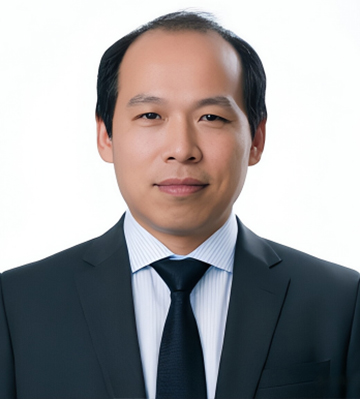
Dr. Rong XIAO (Shenzhen Intellifusion Technologies Co. Ltd)
"Opportunities in LLM model inference on the edge, in the era of OpenClaw"
Mr. Jian ZHEN (Beijing AlgoPower Technology Co. Ltd)
Abstract
In 2026, OpenClaw has become a new foundation in AI industry, a huge wave of new innovations and AI applications have been rising because of it. And huge demand increase for large model (LLM) inference has caused AI computing power shortage in this year. Furthermore, LLM model inference on the edge will become wide spread and pervasive due to more and more AI applications are deployed on more diversified scenarios in more different industries, which could create many new opportunities for AI accelerators. In this topic, I will try to give some key discussions on this topic.
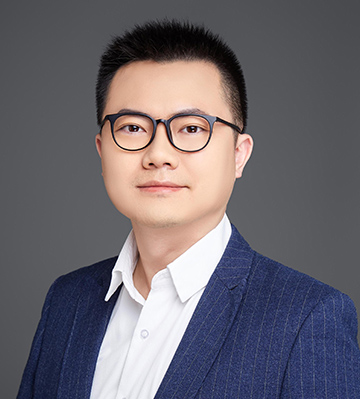
Mr. Jian ZHEN (Beijing AlgoPower Technology Co. Ltd)